


By Ariel
Contents
Key Takeaways:
- Short, clear Bible verses help young hearts remember truth during real-life moments.
- Simple routines turn memory verses into cozy, repeatable habits at home or in homeschool.
- Hands-on pages and coloring sheets invite movement, drawing, and reflection around Scripture.
- Conversations about feelings keep Bible verses connected to friendship drama, worries, and joys.
- Family faith adventures grow when kids feel brave enough to read, repeat, and share God’s Word.
Hello friends! I’m Ariel, and today I’m sharing something super special. So many kids I know — including me — want to understand the Bible better, but sometimes it feels like grownups get all the “easy explanations.” Guess what? Kids can understand the Bible more than people think!
This post gathers 10 Bible verses kids can understand, plus real-life examples of how we can use them during homeschooling, chores, friendship moments, or times when we feel nervous or unsure. These verses guide my heart every day, and I hope they help you too.
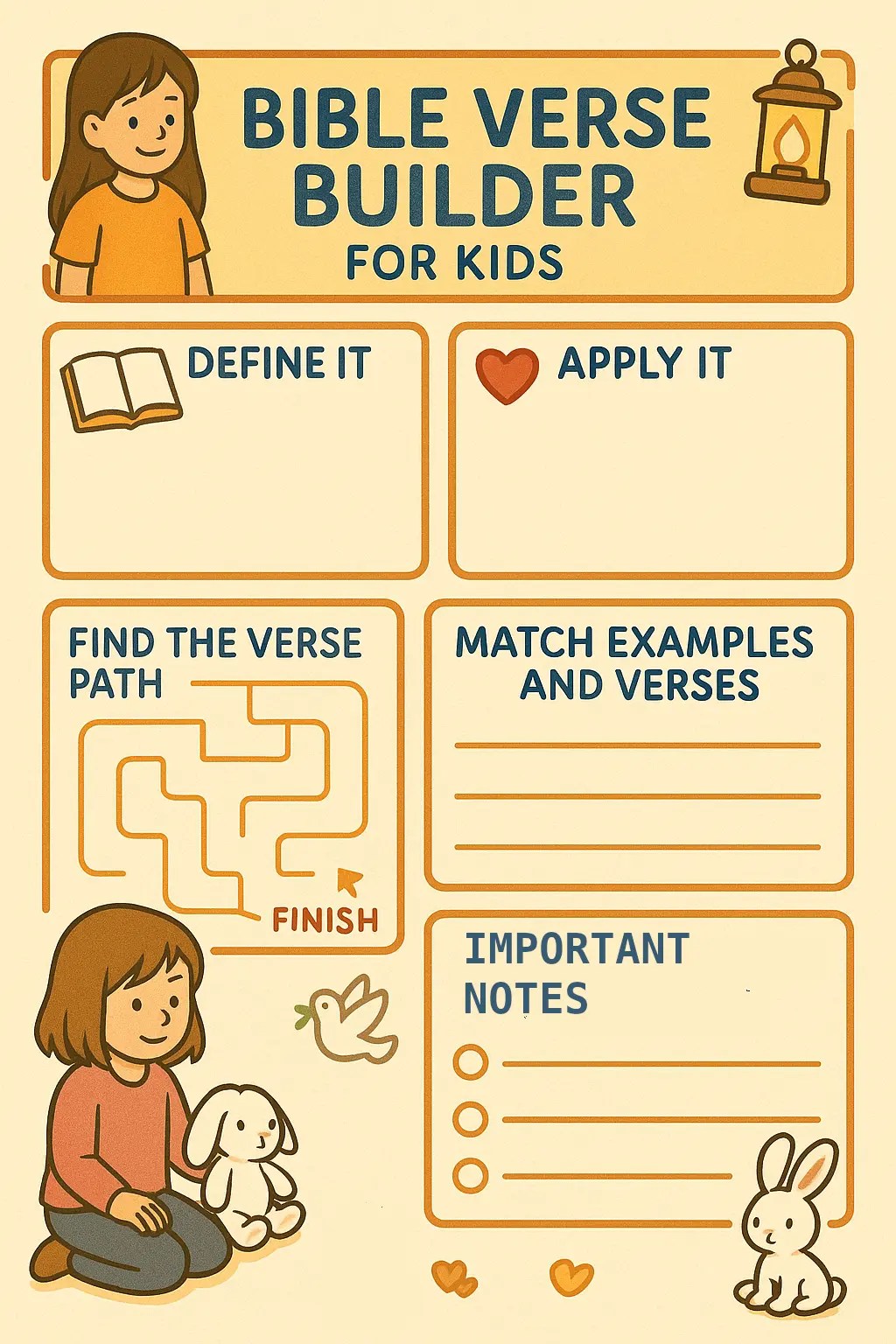
Download the Bible Verse Builder for Kids
Memory verse builder, feeling-matching maze, real-life examples, and room for doodles or journaling.
Open Bible Verse Builder Worksheet
Families can pair this with the matching Bible memory verse coloring page for younger kids.
If you want to explore even more stories with me after this, you can visit posts like Being Born Again, Healing the Man Born Blind, Jesus’ High Priestly Prayer, and The Power of Loving Like Jesus
TL;DR
Bible verses kids can understand use short phrases and simple words so little readers feel safe, seen, and loved by God. Verses chosen for this post connect straight to school worries, friendship trouble, bedtime fears, and everyday gratitude, then flow into a gentle Bible Verse Builder routine families can reuse each week.

⭐ Psalm 119:105 — “Your word is a lamp unto my feet, and a light unto my path.”
This verse teaches me that God’s Word is like having a tiny guiding lantern always turned on inside my heart. Sometimes I feel unsure — especially with new math lessons or decisions during homeschool — but this verse helps me remember that God already sees the road ahead, even when I can’t.
How kids can use this verse:
Before starting your schoolwork or chores, whisper, “Guide my steps, Lord.”
Connection:
When we learned about Nicodemus in the Being Born Again story, I realized Jesus loves helping us understand things little by little.
Mini Challenge:
Choose one verse this week to memorize and imagine it as your own “flashlight.”
Fun Fact — Tiny Verses, Big Brain Power
Brain science shows short repeated phrases build strong memory pathways. Bible verses kids can understand work like gentle “faith loops,” repeating truth until courage and comfort feel automatic.
Kid-Safe Links:
FAQ — Can Very Young Kids Really Memorize Verses?
Short answer: yes, especially when verses feel simple, repeatable, and connected to daily life.
Preschoolers often memorize song lyrics and silly phrases long before they read. Short verses with rhythm or pattern sit alongside those phrases, especially when families repeat them during routines like breakfast, car rides, or bedtime.

⭐ Joshua 1:9 — “Be strong and courageous… for the Lord your God is with you wherever you go.”
Courage doesn’t mean never being scared. Courage means remembering that God goes with us, even into places or situations that feel unfamiliar.
Kid example:
When I learned about the man born blind in our post Healing the Man Born Blind, I realized that Jesus steps right into people’s hardest moments. If Jesus stands with them, He will stand with me too.
Mini Challenge:
Say this verse before trying something new or intimidating.
Family Activity — Verse Match Feelings Game
Use the Bible Verse Builder worksheet or blank paper for this simple matching game.
- Write or print one short verse in the center of a page.
- Draw four circles around the verse and label them: “Worried,” “Lonely,” “Angry,” “Thankful.”
- Invite kids to draw or write quick examples under each feeling.
- Talk together about how that one verse helps in each situation.
Kids usually surprise adults with creative connections, especially when Mr. Fluffernutter “asks” what the verse means during hard days.
Kid-Safe Links:
FAQ — How Many Verses Should Kids Learn at Once?
Short answer: usually one verse per week works well for busy families.
Focusing on a single verse for several days allows time for repetition, drawing, acting, and journaling. Families can still mention other passages while keeping one “main” verse as the anchor for the week.

⭐ John 13:34 — “Love one another.”
This verse is so short that even Alice memorized it while brushing her teeth. Jesus doesn’t make love complicated. He makes it simple enough for everyone — even kids — to practice every single day.
Kid example:
In our post The Power of Loving Like Jesus, I talked about how tiny acts of kindness create “little sparkles of Jesus-love” around people.
Mini Challenge:
Do something kind today and don’t take credit. Let Jesus shine instead.
Fun Fact — Movement Helps Memory
Many children remember verses faster when they attach motions. Short actions for “love,” “trust,” or “light” turn memory work into a mini worship dance, which Mr. Fluffernutter enthusiastically approves.
Kid-Safe Links:
FAQ — Which Translation Works Best for Kids?
Short answer: choose a translation that fits family convictions and reading level.
Some families memorize in KJV because church services use it; others pick NKJV or NIV for smoother reading. Kids benefit most when adults stay consistent, explain unfamiliar words, and invite honest questions.

⭐ Ephesians 6:1 — “Children, obey your parents in the Lord: for this is right.”
This verse helps remind me that obedience isn’t just about following rules — it’s about trust, respect, and teamwork inside our families.
Kid example:
Homeschool mornings feel happier when I listen the first time, because then we finish earlier and get to do fun things like Minecraft STEM projects or drawing Bible scenes.
Mini Challenge:
Try responding with “Yes, Mom!” or “Yes, Dad!” the first time.
Fun Fact — Visuals Boost Recall
Pictures, icons, and color-coding around verses give brains extra hooks. Memory pages that show hearts, stars, and small doodles help kids recall where each promise sits on the sheet.
Kid-Safe Links:
FAQ — What If Kids Resist Memory Verse Time?
Short answer: invite play, choice, and empathy instead of pressure.
Some days feel heavy or fidgety. Parents can offer options such as drawing while listening, acting out stories, or letting kids pick between two verses. Gentle curiosity about underlying feelings usually opens hearts more than strict rules.

⭐ 1 Peter 5:7 — “Casting all your care upon Him; for He careth for you.”
Kids carry worries too — even if grownups don’t always see them. This verse reminds us that Jesus wants us to hand Him every fear, no matter how tiny.
Kid example:
One night I was nervous about something silly, and Dad said, “Give it to Jesus.” The moment I prayed, it felt like my heart got lighter.
Mini Challenge:
Draw your worry, crumble the paper, and say, “Jesus, this belongs to You now.”
Fun Fact — Coloring While Listening Helps Focus
Many kids listen more deeply when hands stay busy. Coloring pages and builder worksheets keep wiggles occupied while hearts quietly absorb God’s words.
Kid-Safe Links:
FAQ — How Do Memory Verses Fit into Homeschool Subjects?
Short answer: weave verses into reading, writing, art, and even math.
Kids can copy verses for handwriting, count words for math practice, illustrate scenes for art, and compare translations for language study. Reflective questions about promises and commands also strengthen critical thinking skills.

⭐ 1 Thessalonians 5:18 — “In everything give thanks.”
Gratitude doesn’t just change your attitude — it changes your whole day.
Kid example:
When Alice and I visited the pond and played with snails, she said, “Thank You, God, for making this squishy little buddy!” Her joy reminded me that gratitude brings life to ordinary moments.
If you love nature fun, check out our 99 Nights in the Forest Coloring Page for cozy creative time!
Mini Challenge:
Say three thank-yous before breakfast tomorrow.

⭐ Ephesians 4:32 — “Forgive one another, even as God… hath forgiven you.”
Forgiveness brings peace where arguments used to grow.
Kid example:
When Alice knocked over my drawing and cried, forgiving her made both our hearts calmer. It felt like God opened a window to let peace blow in.
Mini Challenge:
Forgive someone today, even if it feels small.

⭐ Psalm 34:14 — “Seek peace, and pursue it.”
Peace doesn’t magically appear — we choose it on purpose.
Kid example:
In our post Jesus’ High Priestly Prayer, we learned how much Jesus wants unity between all His followers. When we choose peace, we become part of His prayer coming true.
Mini Challenge:
When frustration pops up, take one slow breath and say, “Help me choose peace, Jesus.”

⭐ Luke 6:31 — “Do unto others as ye would that men should do to you.”
This is God’s version of a playground rule — treat others the way you want to be treated.
Kid example:
When I treat Alice gently, she responds gently too. This verse makes friendships and families more peaceful.
Mini Challenge:
Give someone the kindness you wish someone would show you.

⭐ Matthew 5:16 — “Let your light so shine before men.”
Every kid has a light — creativity, kindness, courage, imagination, or joy. Jesus wants us to use whatever He gave us to help others see Him.
Kid example:
Our STEM + Faith Adventures teach us that science and creativity can glorify God too. Every gift becomes a light.
Mini Challenge:
Pick one of your talents and use it for someone else today.

🌿 Family Reflection Question
Which verse feels the most important for your family right now, and what is one way you can practice it together this week?

🙏 A Prayer From My Heart
Dear Jesus,
Thank You for giving us Bible verses that kids can understand and use every single day. Help us stay brave, kind, forgiving, and full of Your peace. Teach us to shine our light, love others like You, and listen for Your voice in everything we do. Walk with us in our schoolwork, playtime, family moments, and quiet times. Amen.

🎨 Printable Activity: “My Verse Adventure Page”
Use your Memory Verse Sheet Template for this one!
Sections to include:
- “Today’s Verse” (big writing space)
- “What This Verse Teaches Me” (journal box)
- “How I Will Use This Verse in Real Life” (kid-friendly checklist)
- “My Prayer” (small lines)
- “Illustrate It!” drawing area
- “My Faith Challenge of the Day” (star icons to color)
Parents can add this to homeschool binders or quiet-time journals.

💛 A Note From Me (Ariel!)
Thank you so much for reading my post today. Learning the Bible as kids is one of the best adventures ever because God speaks to us in verses that help in real life — school moments, sibling moments, church moments, and even Minecraft-building moments.
If you want to learn more with me, you can explore stories like Nicodemus, the man born blind, Jesus praying for us, or how to love people the way Jesus loves us.
Let’s keep growing together, trusting Jesus, and shining the light He gave us.
You’re amazing, and I’m glad we’re friends on this adventure!
Love,
Ariel
Next Faith Adventure for Kids
Help little hearts learn to talk with God using simple steps, sweet illustrations, and a cozy bedtime-friendly guide written by Alice.
Keep Reading with Ariel
Quick Check Quiz — Bible Verses Kids Can Understand
Choose the best answer for each question, then check results.
Compare Ways to Share Bible Verses with Kids
| Approach | Goal | Likely Outcome for Kids |
|---|---|---|
| Verse drilling without conversation | Fast memorization only | Short-term recall, weak real-life connection |
| Occasional reading without repetition | Exposure to Scripture | Enjoyment but little long-term memory |
| Gentle routine with stories and printables | Heart-level understanding and trust | Kids quote verses during real fears, conflicts, and joys |
Vocabulary for Bible Memory Time
| Term | Kid-Friendly Meaning |
|---|---|
| Memory Verse | Short Bible sentence hidden inside your mind and heart on purpose. |
| Promise | Strong promise from God that always stays true, even when feelings wobble. |
| Command | Clear instruction from God that shows loving ways to live. |
| Scripture | Another word for the Bible or specific words written in God’s book. |
| Application | Way a verse fits into regular life, like school, chores, or friendships. |

References
| Citation | Link |
|---|---|
| Blogging4Adventure — 10 Bible Verses Kids Can Understand | Open |
| Blogging4Adventure — Being Born Again (Jesus and Nicodemus) | Open |
| Blogging4Adventure — Healing the Man Born Blind | Open |
| BibleGateway — John 3:16 (KJV) | Open |
| BibleGateway — Psalm 56:3 (KJV) | Open |
| Focus on the Family — Help Your Child Memorize Scripture | Open |
Practice, Pray, and Remember
Short Bible verses kids can understand turn into anchors when families repeat them with warmth, creativity, and honest talk about feelings. Printables, coloring pages, and simple weekly routines invite Scripture into homeschool lessons, bedtime snuggles, and even Minecraft breaks.

Ariel — Kid Author & Bible Verse Explorer
Homeschool learner and kid writer at Blogging4Adventure, sharing Bible verses, science ideas, and family adventures with younger readers. Posts go through review by Mom and Dad, cross-checking Scripture with trusted study tools and keeping activities safe for homeschool, church, and family time.
FAQ — Bible Verses Kids Can Understand
How young can kids start learning memory verses?
Many toddlers can repeat simple phrases even before reading. Preschoolers often enjoy short verses with motions or songs, while early readers can copy verses onto Ariel’s worksheet pages.
Do kids need to memorize all ten verses from this list?
Families choose pacing. Some work through one verse each week, others focus on just three core verses until those feel rooted in daily life. Deep understanding usually matters more than hitting a certain number.
What if parents feel unsure about their own Bible knowledge?
Shared learning works beautifully. Parents can say, “Let’s learn this together,” look up cross-references, and read kid-safe study notes or family devotions alongside each verse.