


By Alice
Table of Contents
This just in from Fluffernutter News Headquarters (a.k.a. my blanket fort with cookie crumbs): Something important is happening in the grown-up world… again! 📣🐰
But don’t panic! Mr. Fluffernutter says even serious stuff can be squished into stories we understand—just like parables! (That’s Jesus-talk for “stories that sneak in truth,” in case you forgot.) 😇
So today, I, Alice the Reporter Princess of All Things Curious, have decided to launch a Very Official Investigational Adventure into the world of… current events. (That means stuff happening right now, not old stuff like dinosaurs or the time I flushed a gummy bear.)

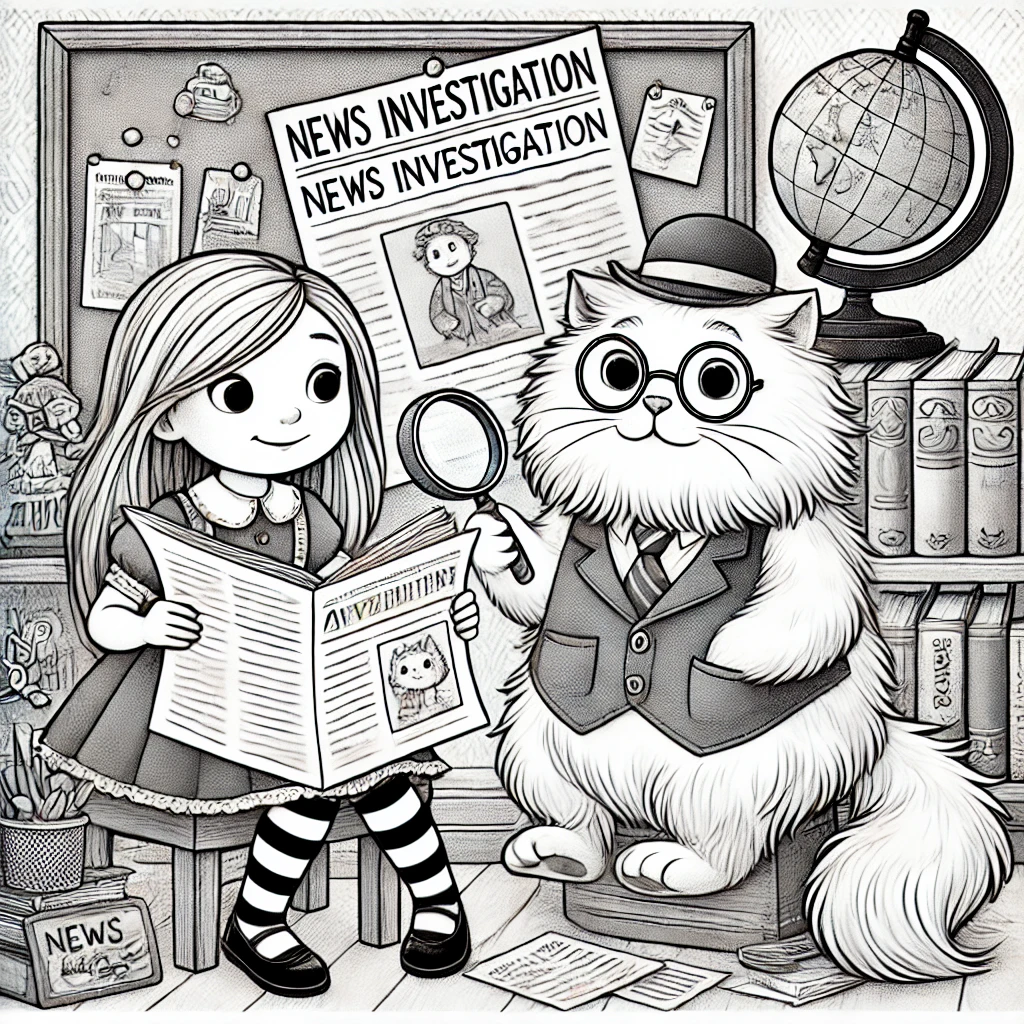
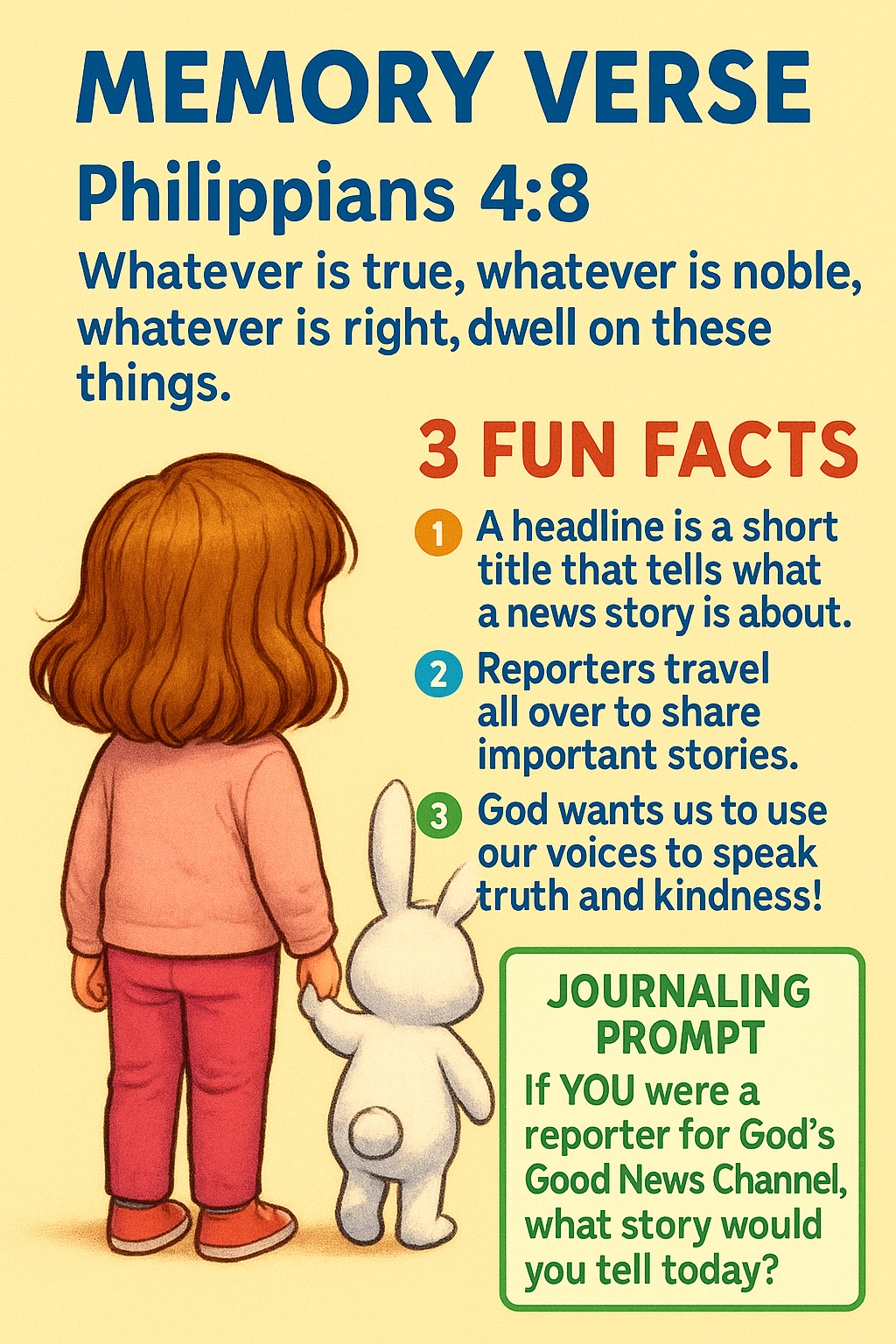
“Fluffernutter,” I said, with my most serious bossy voice, “we MUST find out how this works! What if the news was actually a secret scroll of messages from God? What if bunnies were the real anchors?! What if kids like me are meant to tell stories too?!”
Then he blinked at me with his wise bunny eyes (the left one is extra magical) and whispered,
“Jesus told stories so little ears could understand big things.”
That made my heart do a wiggly happy dance. 💖
So come with me, brave reader! Let’s uncover the mystery of headlines, make sense of the world, and find out what God’s Good News Network might look like… even if it’s powered by juice boxes and holy giggles.
Ready? Grab your clipboard and your courage. This story has only just begun… 🎤🐰🌍
TL;DR: How to teach current events to kids without stress
Goal: build discernment, empathy, and action plans in bite-size steps.
- Skim → Sort: headline scan, classify as news/opinion/ads.
- Sources → Signals: check author, date, evidence, corroboration.
- Bias → Both-sides check: spot loaded words and missing voices.
- Impact → Localize: “How could this affect our town / church / school?”
- Respond → Pray / Plan: write a kind response, service idea, or prayer.

🗞️ Why Current Events for Kids Matter (Even If You’re Not a Grown-Up Yet!) 🤔🐰
BREAKING NEWS FROM MY BUNNY BRAIN:
News isn’t just boring grown-up talk on screens where no one smiles.
Nope! It’s like a big map of the world—except instead of “X marks the treasure,” it shows us where people are hurting, helping, hugging, or even hero-ing. 🌎✨
Mr. Fluffernutter says God gave us curious hearts so we can understand our world—not just hop through it like clueless caterpillars on a trampoline.
So here’s why YOU (yes, even if you’re 5 like me!) should care about what’s happening in the world today:
✔️ News Helps Us Stay in the Know! 🌍
Did your town get surprise snow? Did someone invent jellybean-powered robots? News tells us what’s going on everywhere—from your street to the stars!
It’s like God gave us walkie-talkies to hear stories from faraway neighbors.
Knowing what’s happening around the world helps us love others better. The Bible says:
“Look not only to your own interests, but also to the interests of others.”
— Philippians 2:4 💌
✔️ News Helps Us THINK! 💡🧠
WAIT—what if someone said Fluffernutter stole all the library cookies?! (He didn’t. Probably. 🤨)
Sometimes news isn’t true. That’s why learning to tell real news from fake stuff is like having a superhero brain.
A wise kid doesn’t just believe everything. They ask:
“Who said that?”
“Why did they say it?”
“What does God say about it?”
Fluffernutter calls it Holy Detectiving. 🕵️♂️✨
And Proverbs 18:13 reminds us:
“To answer before listening—that is folly and shame.”
So slow down. Think first. Ask good questions. Then make decisions that match truth and love.
✔️ News Helps Change the World! ⚖️💪
One time, the news helped save a panda. (True story. Google it!) Good news reporting shows us what’s not fair, what’s not kind, and what needs fixing.
- Sometimes it’s about helping hungry kids.
- Sometimes it’s about cleaning rivers.
- Sometimes it’s about people finally getting to vote or go to school.
When we see injustice, we can DO something.
Jesus stood up for people who were hurting. And so can we.
“Speak up for those who cannot speak for themselves.” — Proverbs 31:8
🐰 Fluffernutter’s Fluffy Report:
Ariel’s paper said something SUPER cool:
“News doesn’t just tell us what’s happening. It helps us care about what matters.”
So let’s be kids who care. Kids who ask questions. Kids who believe that God made our brains for thinking AND giggling.
💬 What Do YOU Think?
If YOU had your own news show, what story would you tell today?
What’s a news story you heard that made you care?
How do you decide if something is true or kind?
Kid-Safe Links:
- House rules for reading news as a family (create your own in the PDF)
- Timer: 3-minute headline skim challenge

🕵️♀️ A Sneaky, Peaky, Newsy Bunny Guide! 📚✨
There’s a super smart scroll written by my big sister, Ariel. It’s filled with brain-boosting ideas, faith-filled wisdom, and newsy news about… news! 😮📰
She called it a “guide to understanding journalism,” but I call it a “Holy Bunny Decoder for Current Events for Kids!” (Way cooler, right?)
Here’s what Ariel’s paper taught me before Fluffernutter sat on it and claimed it was a royal map of information lands: 🐰📜
🏡 Local News: Stuff Happening Right Where Your Feet Are!
Local news is like your neighbor waving a flag that says, “Hey! Something’s happening down the street!” It tells you about school lunches, new parks, and city council decisions that might make your family shout “YAY!” or “Wait… what?”
Ariel says when local reporters share what’s going on, it helps families speak up, show up, and maybe even plant a garden in a boring parking lot. 🌱
“Each of you should look not only to your own interests, but also to the interests of others.” — Philippians 2:4
What if you read something in your town’s paper and helped make it better?
That’s local love with holy boots on!
🏛️ National News: Big Stuff for the Whole Country!
National news is like a giant family meeting, but with microphones, snacks, and lots of opinions. 🍪🎙️ It tells us about laws, elections, and plans that affect ALL of us—from sea to shining… mailbox.
When people disagree, Ariel says it’s okay to listen kindly. That’s how we grow into Jesus-sized peacemakers.
Even if someone votes for different things, we’re still neighbors. Still God’s children. Still invited to the table.
Fluffernutter says, “National news helps our prayers grow wider.” 🐰🙏
“Blessed are the peacemakers, for they shall be called children of God.” — Matthew 5:9
🌍 Global News: What the Whole Wide World Is Up To!
Global news is like getting a letter from another country that says, “Hey! We’re doing something important!”
It tells stories about weather disasters, world leaders, pandas, peace treaties, pollution, and even banana shortages! 🍌😱
Ariel says global news helps us remember that we all live on the same spinning blue marble.
What happens far away can still touch our hearts at home.
So if there’s a flood across the sea, we can send help. If there’s hope rising somewhere new, we can cheer.
Because Jesus told us to love everyone—even the ones we haven’t met yet.
“Go into all the world and preach the good news to all creation.” — Mark 16:15 🌎✨
💬 Family Questions to Explore:
- Can kids really be journalists for Jesus? (We think: YES.)
- Which type of news feels closest to your heart—local, national, or global?
- How can your family turn a news story into an act of kindness?
Kid-Safe Links:
- Author & date spot-check mini-worksheet (page 2 of your PDF)
- “Find another source” scavenger hunt (local vs national)

💻 News on Screens: The Good, The Bad, and the Bunny-Trap Headlines! 🔍🖥️
STOP THE SCROLL—this is Fluffernutter’s Emergency Guide to Digital News for Kids! 🐰⚡
Have you ever clicked on a story and it said, “Giant Jellyfish Found in Grandma’s Bathtub!” and then… it was just a balloon?
Yeah. That’s called clickbait. And it’s everywhere. 😤🎈
Ariel says the internet can be a wonderful library, a noisy zoo, and a sneaky prankster—all at the same time. So how do we find the truth when our screens shout a million things a minute?
Let’s bunny-hop through it together:
✅ The Good: News Travels SUPER FAST Now!
Wanna know what’s happening in another country? You can! Right now! Without even putting on shoes! 👣💡
Digital news lets us hear stories from all around the world—from rainforest rescues to space launches to kids winning spelling bees in India. 🌎✨
Fluffernutter says:
“The truth can travel fast… when it’s carried with care.”
Reading stories from many places helps us understand people better. And Jesus said:
“Love your neighbor as yourself.” — Mark 12:31
(Even if your neighbor lives a zillion miles away and eats seaweed chips.)
❌ The Bad: Not Everything Online Is True!
Sometimes, news isn’t really news. It’s just someone’s guess, joke, or super grumpy opinion. Fake stories can spread like glitter in a windstorm! 🌬️✨
That’s why God gave us smart hearts and wise questions. Before we believe something, we should ask:
- Is it from a trusted source?
- Is it loving and kind?
- Is it telling the whole story?
Proverbs 14:15 reminds us:
“The simple believe anything, but the prudent give thought to their steps.” 💭
Let’s be prudent, which means “thinky with love.”
😱 The Clickbait: Tricky Titles That Fool Your Face
Clickbait is like a shiny candy wrapper… but inside is a broccoli. 😬
Some websites try to trick you with titles like:
- “You Won’t Believe What This Dog Did with a Calculator!”
- “This One Trick Will Change Your Life Forever!”
But then the article? BORING or not even true.
Clickbait steals your attention, wastes your time, and teaches you… nothing. (Except maybe how to roll your eyes.)
Fluffernutter’s tip:
“If a title sounds like a circus, check if the clowns brought the truth.”
💬 Questions to Explore with Your Family:
- What would you name your own news channel that shares God’s truth and kindness?
- Have you ever been tricked by a clickbait headline?
- How can we tell if digital news is trustworthy?
Kid-Safe Links:
- Bias word bank (use in the vocabulary table below)
- Two-column note page: “What’s said / What’s missing”

🕵️♀️ How to Spot Fake News (Without Falling for a Wiggly Banana Hoax) 🚨🍌
Okay, listen up, Truth Detectives! 🧠
Mr. Fluffernutter has a very important announcement:
“NOT EVERYTHING ON THE INTERNET IS TRUE!”
(Even if it has a sparkly GIF and 27 exclamation points.)
Sometimes the news tells you helpful things.
And sometimes… it tells you a cat married a toaster. 🙀🍞
That’s why Ariel says we all need to learn fact-checking for kids—which means using your brain like a flashlight that shines on sneaky news stories. 💡
Let’s jump into Alice’s Three-Step Truth Test, sponsored by Fluffernutter’s Very Real Detective Hat. 🐰🎩
✔️ Step 1: Check the Source! 🔍
Where did the story come from? A trusted news site? Or… a blog called “Unicorn Farts Unlimited”? 🦄💨
REAL news usually comes from reporters who ask questions, double-check facts, and don’t make stuff up just to get clicks.
Ask:
- Does the site sound serious or super silly?
- Is there an author?
- Can you find the same news somewhere else?
Proverbs 18:17 says:
“In a lawsuit the first to speak seems right, until someone comes forward and cross-examines.”
(That’s Bible-speak for “check before you believe!”)
✔️ Step 2: Look for Bias! 🤨
Does the article sound like it’s trying to make you angry, scared, or SUPER sure one side is always right?
Sometimes news wants to persuade instead of inform.
Like saying, “Everyone who eats pancakes is obviously a hero,” which… might be true, but also… suspicious. 🥞💥
Ask:
- Does the language sound emotional or dramatic?
- Are both sides of the story shown?
- Is it telling facts, or just yelling opinions?
Fluffernutter says:
“Good news stories don’t yell—they explain.” 🐰📚
✔️ Step 3: Check Other Places! 🧠🌐
If only one website says aliens stole the Eiffel Tower, maybe don’t pack your bags for Mars just yet. 🛸😅
REAL stories show up in multiple trustworthy places.
That’s how you know it’s not just a prank or mistake.
Try checking:
- A national newspaper
- A local news station
- A fact-checking site (Ariel likes Snopes and BBC Kids!)
Bible bonus time!
“The wise store up knowledge.” — Proverbs 10:14 📖
Smart kids don’t just read—they compare!
💬 Questions for Family Chat Time:
- How can your family practice “truth-telling” the way Jesus would?
- Have you ever believed a silly news story by accident?
- What clues help you know if a headline is fake or true?
Kid-Safe Links:
- Impact circles printable (in the lesson PDF)
- Town-hall style family discussion guide

🎩 Alice’s Ultimate News Detective Challenge! 🕵️♀️📰💥
CALLING ALL MINI-JOURNALISTS AND BUNNY-APPROVED TRUTH HUNTERS! 📣🐰
This is not a drill. Mr. Fluffernutter just pressed the “Very Important Reporter Button” (which may have been a jellybean).
It’s time to try the ULTIMATE news literacy for kids challenge—straight from Ariel’s Super Serious Grown-Up Guide… but made 127% more fun. Ready to investigate with glitter, faith, and fabulous questions?
Let’s GO! 🚀
📰 Headline Hunt: Who Said What and Why?
Your mission: Pick three news stories all about the same thing (like a parade, election, or panda escape).
Now compare their headlines. Are they serious? Silly? Scary? Super dramatic?
💭 Ask yourself:
- What words did they choose?
- Did any title make you feel worried or excited before you even read the story?
- Which one sounds the most fair?
Fluffernutter says:
“Words have power. Use them to build bridges, not bonk people.” 🐰✨
Proverbs 12:18 agrees:
“The words of the wise bring healing.”
🌍 Local vs. Global: Same Story, Different Glasses?
This one’s cool: Find ONE story—like a world leader visiting a country or a new invention—and see how it’s told in different parts of the world.
Use a U.S. news site AND one from another country (BBC Kids, Reuters, etc.).
🤓 What’s different?
- Do they explain different things?
- What feels important in one version but missing in another?
- How does culture change the angle of the story?
Jesus saw people’s hearts no matter where they lived. ❤️
“Go and make disciples of all nations…” — Matthew 28:19
❌ The Fake News Test: Is That Real or Just Ridiculous?
WARNING: Not everything online is true. Even if it has sparkles. Or yells. Or says “BREAKING!”
Find a news story that makes you go, “Uhh… really??” Then play detective:
- Who wrote it?
- Can you find it on other real news sites?
- Does it have expert quotes or just emojis and yelling?
Then decide:
✔️ Truth?
❌ Trash?
🐰 Possibly written by a confused space hamster?
God wants us to love truth.
“Do not spread false reports.” — Exodus 23:1
✍️ Write Your Own News Story! (YOU Can Do This!)
Ooooh, now it’s YOUR turn! Write a news article about something awesome at school, church, or your neighborhood.
Use these steps:
- 🗞️ Catchy Headline (not too dramatic—just snappy!)
- 🧠 What Happened? (Tell the truth with kindness)
- 👀 Who Was There? (Add quotes if you can!)
- 📚 Finish With Facts (and maybe a bunny if it fits)
Fluffernutter’s example headline:
“ALICE RESCUES SNACK TIME FROM BURNED TOAST DOOM”
🚀 Bonus Challenge: Be a Truth-Teller for God’s Kingdom!
Write one whole article and share it with your family, teacher, or church! You’re not just learning how to report—you’re learning how to SHINE LIGHT.
Jesus said:
“Let your light shine before others, that they may see your good deeds and glorify your Father in heaven.” — Matthew 5:16 ✨
💬 Family Talk Time:
- How can we share truth in ways that heal and help?
- Which activity made you feel the most like a real reporter?
- What kind of news stories does your heart care most about?
Kid-Safe Links:

📰 Let’s Stay Informed Together! (With Snacks, Questions & Jesus!) 🌍💬
Okay, okay, okay—listen up, world-changers! 🌎
Reading the news isn’t just about sitting in your grown-up’s chair and pretending to sip coffee while saying, “Hmm, fascinating development in the pancake supply chain.” ☕🥞
Nope! Teaching current events to kids means turning our brains into super-powered idea rockets—asking big questions, sharing thoughts, and using what we learn to make things better.
Fluffernutter says:
“Reading news is like holding a flashlight. It shines truth into the world and helps us see what God wants us to care about.” 🐰✨
📲 Why News Matters More Than Ever
Today, there’s SO MUCH information flying through the air—phones, computers, watches, maybe even smart toasters (I’m watching you, Toasterbot 3000).
That’s why we can’t just read news—we have to understand it.
Reading stories from around the world helps us:
- 👀 See what others are facing
- 🧠 Think with kindness and courage
- 💖 Learn how to help—like Jesus would!
“Let the wise listen and add to their learning.” — Proverbs 1:5
God gave us ears, hearts, and squishy pink brains so we can listen, learn, and love well.
🌍 Challenge: Peek at a Different Country Every Week!
Try this sparkly brain exercise:
Pick ONE article each week from a country far, far away (like Australia, Kenya, or somewhere with volcanoes AND ice cream).
Ask: “What do THEY care about? What surprises me? What would Jesus want me to notice?”
Suddenly, your heart grows bigger—and your world gets way more interesting.
Fluffernutter calls this “compassion cartwheels.” 🐰💫
🗣️ Let’s Talk, Think, and Shine God’s Light
When families talk about current events, they become love-powered think tanks. You don’t have to fix everything in the world.
But you CAN:
- Ask good questions
- Pray for people in the stories
- Share kind ideas
- Write your own news with hope inside
That’s what Jesus did—He noticed people, listened well, and then changed the world with truth and love.
“Speak the truth in love.” — Ephesians 4:15 💕
Drop a comment or doodle below—I’ll be reading with bunny ears on. 🐰🗞️
With giggles, glitter, and grace,
💖 Alice & Mr. Fluffernutter
Related on Blogging4Adventure
Quiz: Read, Discern, Respond
10 quick questions. Score reveals with explanations. Retake anytime.
| Type | Clues | What Kids Should Do |
|---|---|---|
| News Report | Neutral tone, multiple sources, date/time, quotes, data | Underline facts; list who, what, when, where, why, how |
| Opinion/Editorial | First-person voice, persuasion, argues a side, fewer sources | Identify claim + 2 reasons; find a counter-opinion |
| Sponsored | “Sponsored” or “Partner” label, brand links, product focus | Mark as advertising; ask what the sponsor wants you to do |
| Term | Kid-Friendly Definition |
|---|---|
| Headline | The big title that tries to make you click. |
| Source | Where the information comes from (person, document, or organization). |
| Evidence | Facts, data, quotes, or documents that support a claim. |
| Opinion | What someone thinks or believes, not a report of facts. |
| Bias | A tilt or preference that can make information one-sided. |
| Corroborate | To confirm something by checking another reliable source. |
| Sponsored Content | An ad that looks like an article (it should be labeled). |
| Loaded Language | Words that are extra emotional to push you toward a feeling. |
| Primary Source | First-hand info like official documents, data, or direct witnesses. |


| Citation | Use in Lesson |
|---|---|
| News Literacy Project. “Checkology & News Literacy Guides.” https://newslit.org/ | Source evaluation & bias checks |
| Common Sense Media. “News & Media Literacy for Families.” https://www.commonsensemedia.org/ | Family media rules & talking points |
| PBS LearningMedia. “Media Literacy Collections.” https://pbslearningmedia.org/ | Kid-safe classroom activities |
| Poynter Institute. “MediaWise for Teens.” https://www.poynter.org/mediawise/ | Teen-friendly fact-checking tools |
Recap
From headline skimming to faithful action, kids practiced:
Exit Ticket: write one fact learned, one question you still have, and one way to show kindness related to today’s story.

Alice is a student author at Blogging4Adventure who loves turning big topics into kid-friendly stories, quizzes, and crafts. Favorite things: sticker charts, marshmallow catapults, and asking “why?” twice.
[…] Related: Current Events for Kids […]
[…] Cycle for Kids News Literacy for Kids Weather Myths […]
[…] Current Events for Kids […]
[…] Spot demand in headlines (Current Events for Kids) […]
[…] News Literacy for Kids […]
[…] Current Events for Kids — practice spotting sources. […]